

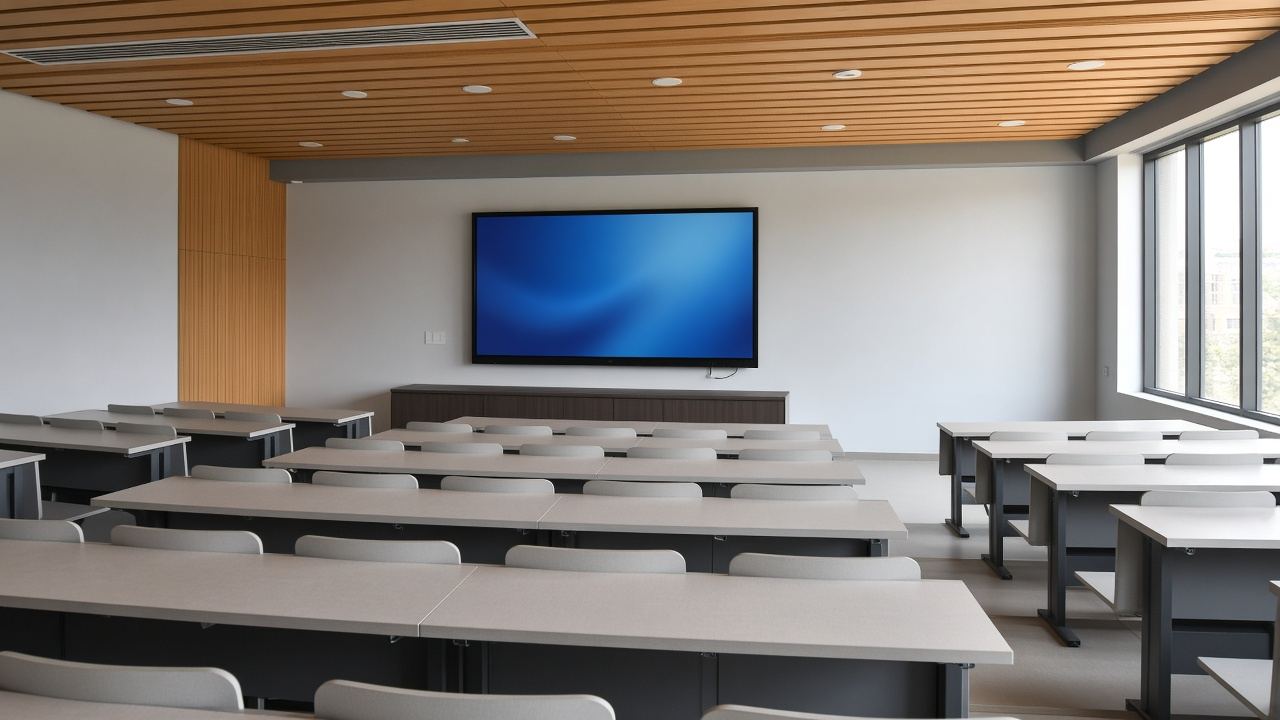
When a classroom goes hybrid, the first purchase is often a camera. The first complaint is almost always sound. Students in the room cannot hear a soft voice. Students online hear the room, not the sentence. Faculty stop moving because the microphone is a lapel they do not trust.
A teaching room needs local reinforcement and a far-end mix designed together. The voice has to reach the last bench and the remote cohort without one fighting the other. Cameras matter — tracking lets a teacher walk and write — but they cannot repair a muddy mix.
Control should respect a class that has already started. Touchless presets, a display that can be a board, and a system that does not ask for a login in the first minute.
This is the standard we applied in hybrid classrooms at International Management Institute, Delhi: processing, reinforcement, tracking and a simple way to teach. The camera was part of the room. It was not the room.